
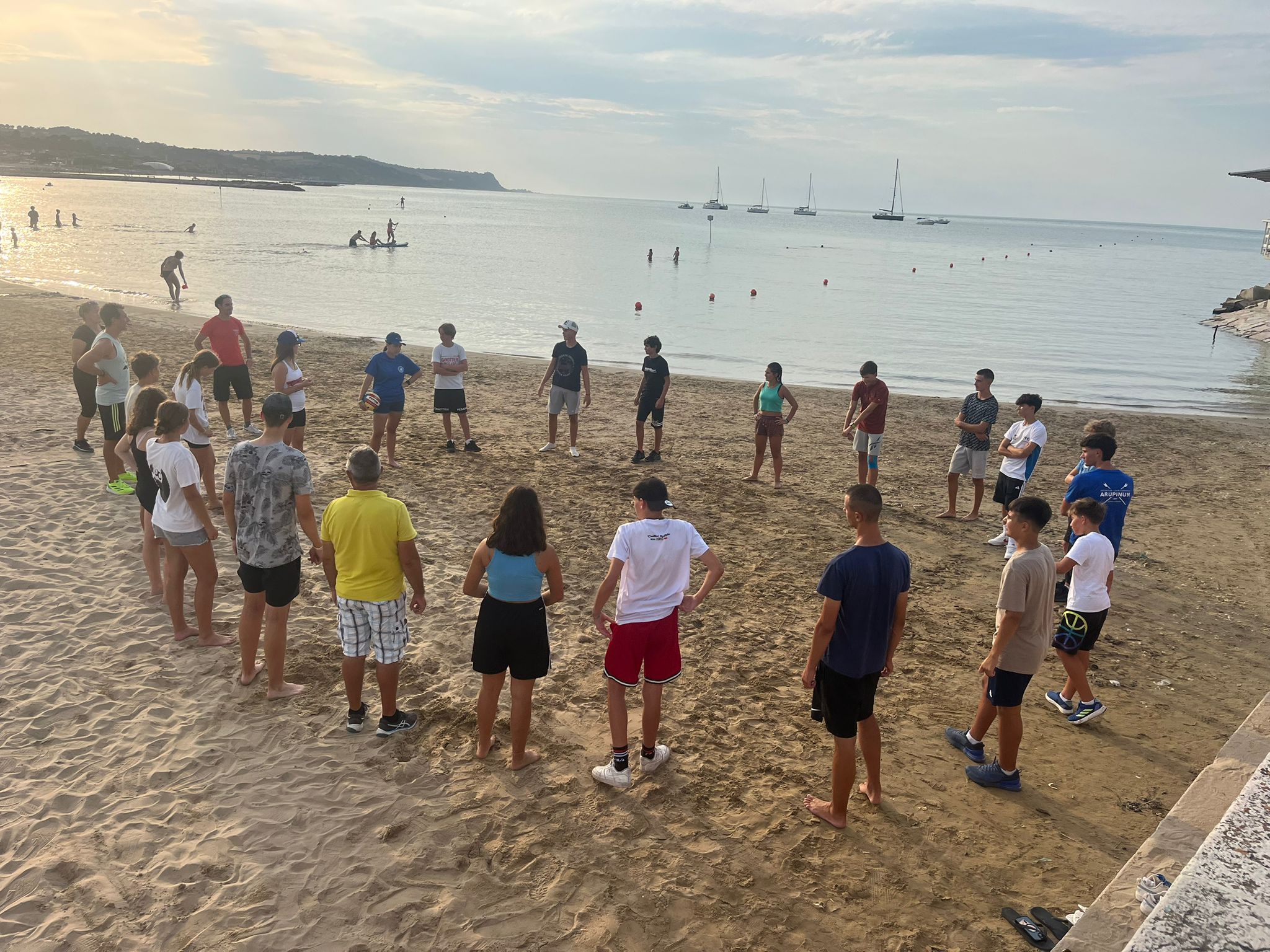
In KEYS (Keeping our young generations in sports), we’re always looking for training ideas that do two things at once: boost performance and keep sport engaging, varied, and sustainable for young athletes. That’s exactly why we’re sharing our new deliverable “2.1 Motor Transfer”—a practical guide on how skills learned in one sport can help (or sometimes hinder) learning and performance in another, with a clear focus on flat rowing and coastal rowing / Beach Sprint.
What is “motor transfer” (and why should coaches care)?
Motor transfer is the principle that training in one activity can influence how we learn and perform another activity. In real life, it’s what happens when:
- a swimmer’s breathing control supports endurance in rowing,
- a basketball player’s agility helps with Beach Sprint starts and turns,
- or, sometimes, a habit learned elsewhere clashes with rowing technique (negative transfer).
Instead of treating cross-training as a “nice extra”, this document shows how to make it intentional: choosing the right complementary sport at the right time, for the right rowing goal.
What you’ll find inside the document
The deliverable is designed to be clear, structured, and usable. It combines a short evidence-based foundation (types of transfer, what makes it positive vs negative) with a highly practical framework that coaches can replicate.
To make things concrete, the KEYS Technical Commission selected 15 sports with strong potential transfer to rowing and analysed them in three groups:
- Aquatic sports (e.g., kayak, swimming, SUP, sailing, water polo)
- Sports with a ball (e.g., basketball, beach volleyball, rugby, dodgeball, floorball)
- Other land-based sports (e.g., Olympic weightlifting, skating, cycling, cross-country skiing, CrossFit)
For each sport, the document includes:
- key characteristics and development needs,
- how it transfers to rowing (and how rowing transfers back),
- a simple 1–10 score for transfer into rowing and from rowing,
- and suggestions for implementation (how to integrate it into a rowing training plan).
One big insight: match the sport to the rowing discipline
Here’s a takeaway we love because it’s so actionable:
- Ball sports tend to support Beach Sprint more directly, thanks to agility, rapid direction changes, reaction speed, spatial awareness, and decision-making under pressure—exactly what athletes need for beach runs, quick boat entry, and tactical manoeuvring.
- Cyclical endurance sports (like kayaking, cycling, skating, cross-country skiing) often show strong transfer to flat rowing, supporting rhythm, continuous force production, aerobic development, and sustainable power output.
Practical “take-home” messages (coach-friendly)
The document closes with clear coaching points, including:
- Train transfer on purpose: cross-training works best when planned strategically (not randomly).
- Use variability to build robust athletes: different movement patterns improve adaptability and resilience.
- Support injury prevention through diversity: complementary sports help reduce repetitive strain.
- Develop soft skills too: teamwork, attention control, and stress management can be trained through smart sport choices.
- Integrate, don’t replace: other sports should enrich rowing—especially in preparation, transition, and rehabilitation phases.
Why we’re sharing this now
Because it supports the KEYS mission in a very concrete way: keeping young people in sport by making training more enjoyable, more holistic, and less dependent on early specialisation. It also gives clubs and coaches a shared language to collaborate across disciplines—useful for schools, multi-sport clubs, and community programmes.
If you’re a coach, athlete, parent, or sport organisation working with youth, we invite you to read the deliverable, try one idea in your next training cycle, and share it with your network.
Download here (.pdf | 466 Kb)

Comments are closed